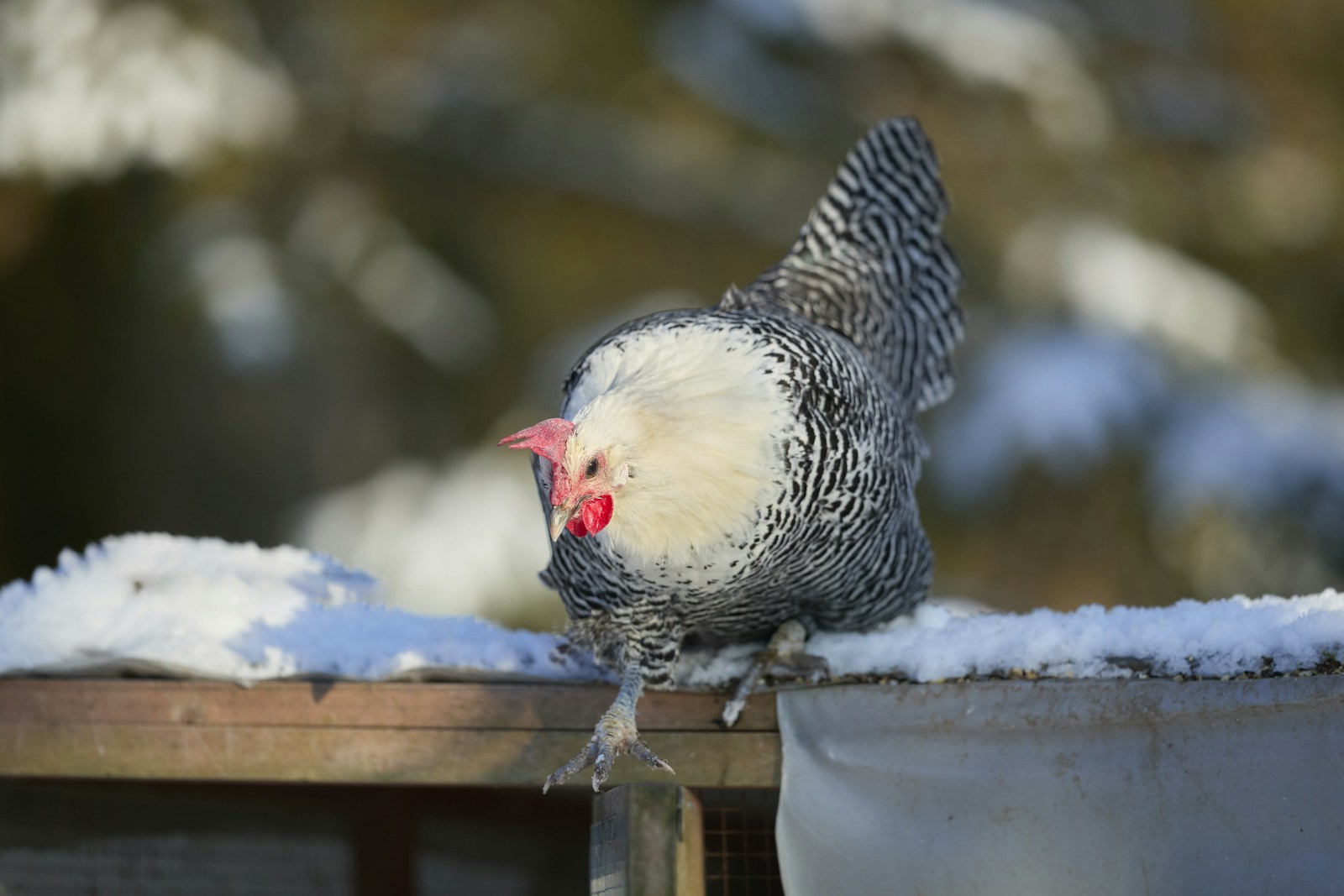
The First Hard Freeze
The first hard freeze always arrives like an accusation. You step out in November, breath fogging, boots crunching on soil that was soft yesterday, and your mind goes straight to the coop. Those hens that bossed the yard all summer now huddle on the roost with their heads tucked, and suddenly you're wondering if you're a bad chicken keeper for letting them face a 12-degree night without backup.Then the debate finds you. Someone at the feed store swears by the red heat lamp clamped to a rafter. Someone else online says heat lamps kill more chickens than cold ever does — through coop fires. Both of them sound very sure of themselves.
Here's the quieter truth that extension offices and longtime keepers keep repeating: a healthy, fully feathered chicken is built for winter. Chickens are not tropical birds you've dragged into the snow. They carry their own down parkas, they fluff and trap warm air against their skin, and most of the winter losses people blame on "the cold" are actually losses from moisture, drafts, and frozen water. Cold itself is rarely the problem. Bad coop air is. So let's sort out the myths, then talk about the five things that genuinely matter.
Myth vs. Fact: Winter Chicken Care
Myth: Chickens need a heat lamp once it drops below freezing. Fact: Most common laying breeds — Rhode Island Reds, Plymouth Rocks, Orpingtons, Australorps, Wyandottes — handle temperatures well below freezing without supplemental heat, thanks to dense feathering and a high resting body temperature around 105–107°F. A heat lamp introduces a real fire risk (dust, straw, and a hot bulb are a bad combination) and can prevent birds from acclimating, making them more vulnerable if the power goes out. The exception: chicks that aren't fully feathered, or sick and injured birds being nursed back — those do need warmth. Myth: Hens simply won't lay eggs all winter. Fact: Egg production drops in winter because of shorter days, not cold. Hens need roughly 14–16 hours of daylight to maintain laying. Many keepers accept the natural slowdown (it gives the hens' bodies a rest), and others add a few hours of supplemental light on a timer. Cold alone doesn't shut down laying — darkness does. Myth: You should smear Vaseline on combs to prevent frostbite. Fact: This is one of the most repeated tips in backyard-chicken circles, and veterinarians and extension educators are lukewarm on it at best. Frostbite on combs and wattles is caused by moisture condensing on exposed skin in a cold coop, not by a lack of petroleum jelly. A greasy coating can trap moisture against the skin and may make things worse. Prevention beats treatment: keep the coop dry and ventilated, and choose pea-comb or rose-comb breeds (Buckeyes, Wyandottes, Chanteclers) if you live somewhere with brutal winters. Myth: Seal the coop up tight to keep the warmth in. Fact: This is the single most damaging winter myth, and it kills birds. Chickens exhale a surprising amount of moisture, and so does their droppings. In a sealed coop, that humidity has nowhere to go. It condenses on combs and wattles, soaks bedding, and creates the damp, ammonia-heavy air that causes respiratory illness and frostbite. A cold, dry, well-ventilated coop beats a slightly warmer damp one every time.The 5 Things That Actually Matter
Treat this as your winter checklist. Everything else is decoration. 1. Ventilation, not insulation. You want openings high up — under the eaves, near the roof ridge — that let warm, moist air escape while no draft hits the roosting birds directly. The rule of thumb: air should move above the chickens, never across them. If you smell ammonia when you open the coop door, you don't have enough ventilation, full stop. 2. Water that isn't frozen. Chickens drink less in winter but still need constant access. A frozen waterer is the fastest route to dehydrated, stressed birds. Heated water bases or heated dog bowls work well; if you have no electricity at the coop, plan on swapping waterers twice a day and bringing the frozen one inside to thaw. Rubber bowls are easier than plastic here — you can flex the ice right out. 3. Windbreaks on the run. Cold doesn't bother chickens much; cold wind does. Staple tarps or clear plastic sheeting to the windward sides of the run (leave the top few inches open for airflow). A few straw bales stacked along the north side work beautifully and double as entertainment — chickens love scratching around them. 4. Deep litter. Instead of cleaning the coop weekly, add fresh bedding (pine shavings or straw) on top of the old through winter. The bedding pack composts slowly from the bottom up, generating a small amount of heat and giving the birds something to scratch through on days they won't leave the coop. Keep it dry on top — if it smells like a swamp, add more bedding or reconsider your ventilation. 5. Light for laying (optional but effective). If you want winter eggs, a simple timer on a low-wattage bulb can extend "daylight" to 14–16 hours. Add the light in the morning hours (so it comes on before dawn) rather than evening — an abrupt lights-out at night can leave hens stranded off the roost, panicking in the dark. And give the girls a break eventually; a natural molt and rest period is part of a healthy laying cycle.Your Month-by-Month Winter Timeline
November — the setup month. Clean the coop thoroughly before the real cold arrives, then start your deep-litter base. Check the roof and walls for leaks — a drip onto the roost area is a frostbite factory. Wrap the windward sides of the run. Test any heated waterers now, not in January when you discover the cord is chewed. Worm and check birds for mites while handling is still pleasant; parasites plus cold stress is a miserable combination. December–January — the maintenance months. This is mostly about water and watching. Swap or check waterers daily. Toss scratch grains on the deep litter in the late afternoon — the activity keeps birds moving and generates a little body heat before roosting, and keepers have done this for generations. Collect eggs more often than in summer; an egg left in a nest box at 10°F cracks and freezes fast. Watch combs on roosters and large-combed hens for the pale, waxy tips that signal early frostbite, and fix the moisture problem causing it rather than treating the symptom. February — the turning point. Days lengthen and the flock gets restless. This is when deep litter is at its deepest and smelliest — top it up generously. Start planning spring: order chicks if you're expanding, sketch any coop repairs for the thaw. Some hens will surprise you with an early egg as daylight crosses 12 hours. Resist the urge to deep-clean the whole coop on the first 45-degree day and strip out all that insulating bedding before the last freeze; late cold snaps are normal.Feed and Water in Cold Weather
Chickens burn more calories staying warm, so winter is not the time to skimp on feed. Keep a quality layer feed available free-choice — the birds will self-regulate, and most eat noticeably more in January than in July. Scratch grains and cracked corn as an afternoon treat are traditional for a reason: digesting grains generates body heat overnight, and the scratching activity itself keeps birds warm and busy. Think of it as a bedtime snack, not a diet; layer feed remains the nutritional backbone.Grit matters more in winter, too. With snow on the ground, hens can't pick up the small stones they'd normally find while foraging, so make sure grit is available free-choice if your birds aren't getting outside much.
For water, the unglamorous truth is that consistency beats gadgets. A $40 heated base is wonderful, but a keeper who reliably swaps a rubber bowl twice a day does just as well. What you can't do is let them go without. Even a few hours of no water in freezing weather stresses the flock more than the cold itself.
University extension services consistently land in the same place: dry air, liquid water, wind protection, and good feed. No miracles, no gadgets required. For detailed coop-ventilation diagrams, your own state's cooperative extension site is worth a visit; most publish free winter-poultry guides specific to their climate zone.
Winter chicken keeping rewards the keeper who does the boring things reliably. Your hens don't need a heated condo. They need dry air moving over their heads, water they can actually drink, a windbreak, deep bedding, and a full feeder. Get those five right, and come March you'll have a flock that looks at you like the cold was never anything to worry about — because for them, it wasn't.
#chickens #backyardchickens #wintercare #homesteading #chickencoop #poultry #rurallife #selfsufficiency #farmlife #coldweather