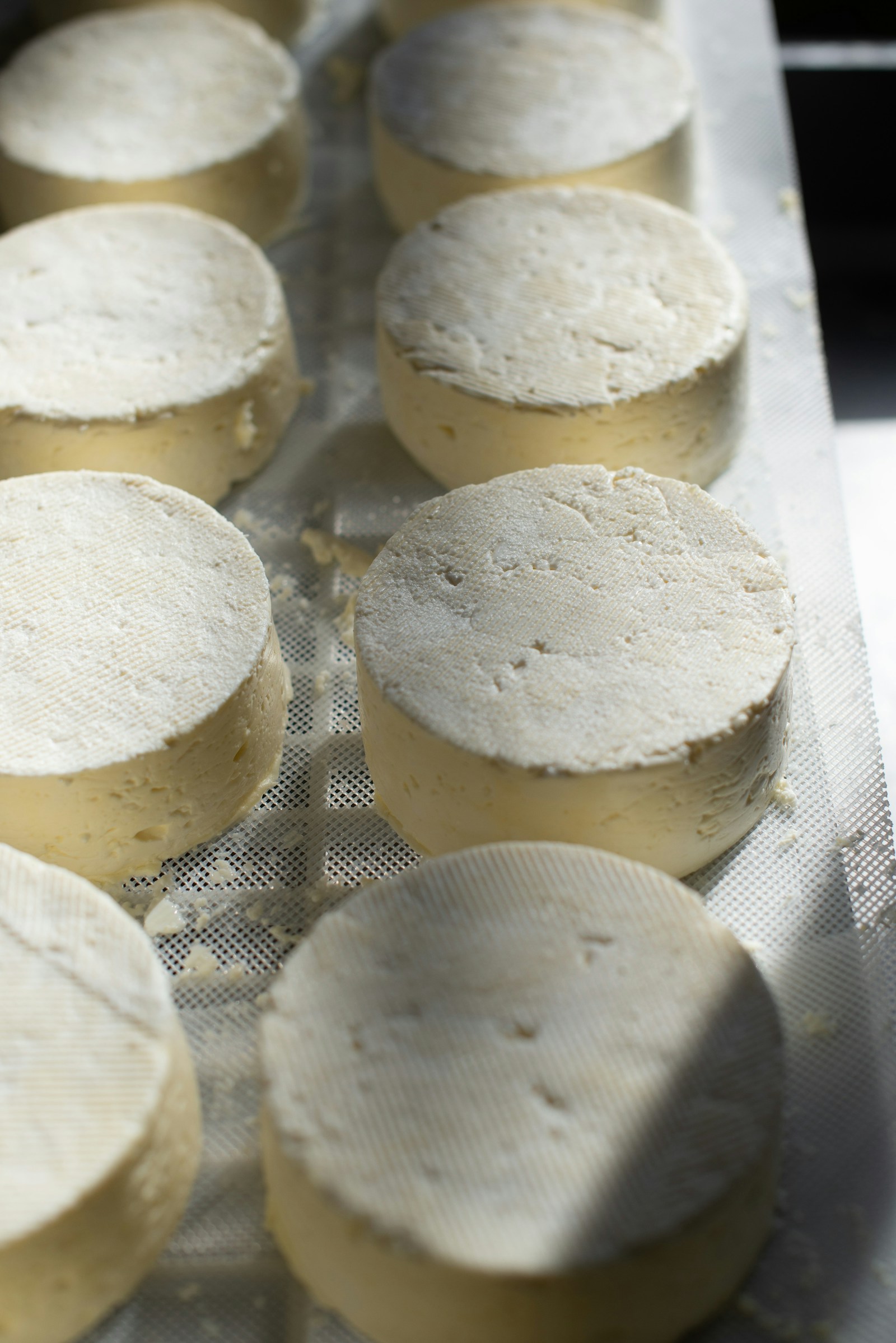
Fresh Cheese: The Easiest Homestead Dairy Win
Aged cheese is a project. It wants caves and cultures and patience measured in months, and it will punish small mistakes the way only a six-month commitment can. Fresh cheese is the opposite. It's a Tuesday-afternoon activity. Milk, heat, something acidic, a piece of cloth — and an hour later you're eating cheese you made, still faintly warm, on toast that hasn't cooled yet.That's why fresh cheese is the best first dairy project on a homestead. There's no starter culture to keep alive, no waxing, no waiting. If it goes wrong, you've lost an hour and a gallon of milk, and you can try again tomorrow. If it goes right — and it usually does — you get something the grocery store version never quite manages: texture and flavor that haven't survived shipping.
The three cheeses below all follow the same basic idea: heat milk, add acid, let the curds form, drain them. What changes is the milk, the acid, the temperature, and what you do with the curds afterward. Learn one and the other two come easily.
What You Need (for all three)
You don't need a cheesemaking kit. You need a heavy-bottomed pot (thin pots scorch milk and ruin everything), a thermometer, a slotted spoon, a colander, and something to drain through — a few layers of cheesecloth, a clean cotton flour-sack towel, or even a clean pillowcase in a pinch. That's the whole equipment list.On ingredients: use the freshest milk you can find, and check the label. Milk labeled "ultra-pasteurized" or "UHT" will not set into curds properly — the high-heat processing damages the proteins. Standard pasteurized milk, including ordinary grocery-store whole milk, works fine. Raw milk works beautifully if you have a trusted source, but everything below assumes standard pasteurized milk.
1. Ricotta (the whey cheese, or the quick milk version)
Ingredients: 1 gallon whole milk, 1 teaspoon salt, 1/3 cup lemon juice or white vinegar. Steps: 1. Pour the milk and salt into your heavy pot. Heat slowly over medium, stirring now and then so nothing sticks, until the thermometer reads 190°F — steaming and trembling, just short of a boil. 2. Take the pot off the heat. Pour in the lemon juice, stir once or twice gently, and stop. Walk away for 10 minutes. 3. Come back to a pot of distinct curds floating in yellowish whey. If the whey still looks milky white, stir in another tablespoon of acid and wait 5 more minutes. 4. Line your colander with damp cheesecloth and set it over a bowl or in the sink. Ladle the curds in gently — don't pour aggressively or you'll shatter them. 5. Let drain 15–20 minutes for soft, spreadable ricotta; up to an hour for firmer, drier curds. 6. Taste and add a pinch more salt if needed. Eat warm. Watch out for: boiling the milk. A rolling boil makes tough, rubbery curds. Pull it at 190°F even if your instinct says hotter is better — it isn't.2. Paneer (the firm, sliceable one)
Ingredients: 1 gallon whole milk, 1/4 cup lemon juice or white vinegar mixed with 1/4 cup water (diluting the acid gives a softer set). Steps: 1. Bring the milk to a full boil over medium-high heat, stirring frequently. Unlike ricotta, paneer wants the boil. 2. Off the heat, add the diluted acid a little at a time, stirring gently. The milk will separate into curds and greenish whey within a minute or two. 3. Rest 5 minutes, then pour through your lined colander. Rinse the curds under cool water — this washes away the lemon tang. 4. Gather the cloth corners, twist into a bundle, and squeeze out whey until it stops dripping freely. 5. Flatten the bundle into a disc about an inch thick, set it on a plate, put another plate on top, and weight it down — a kettle of water, a couple of cans, anything heavy. 6. Press 1–2 hours. Less time gives soft paneer that crumbles; more time gives firm cubes that hold their shape in the pan. 7. Unwrap, cut into cubes, and it's ready. For the classic golden crust, pan-fry cubes in a little oil until browned on the edges. Watch out for: skipping the rinse. Unrinsed curds carry a sour edge that fights with the spices in your curry. Thirty seconds under the tap fixes it.3. Queso Fresco (the crumbly, salty one)
Ingredients: 1 gallon whole milk, 1/4 cup white vinegar or lime juice, 1 1/2 teaspoons salt. Steps: 1. Heat the milk to 170°F — noticeably cooler than ricotta. Stir occasionally. 2. Off the heat, stir in the vinegar. Let sit undisturbed 10–15 minutes until clean curds form in clearish whey. 3. Ladle curds into your lined colander and drain 20–30 minutes. 4. Turn the curds into a bowl and work in the salt thoroughly with your hands or a spoon. Taste — it should be distinctly but pleasantly salty. 5. Pack the salted curds firmly into a small bowl or mold lined with cloth, pressing down to eliminate air pockets. 6. Chill in the mold at least 2 hours (overnight is better). Unmold, and crumble or slice as needed. Watch out for: under-salting. An unsalted queso fresco tastes flat and bland — the salt is doing real flavor work here, not just seasoning. Don't be shy.Troubleshooting: When the Curds Misbehave
| Problem | Likely cause | Fix ||---|---|---|
| Milk won't separate / whey stays milky | Not enough acid, or ultra-pasteurized milk | Add acid a tablespoon at a time and wait; next batch, check the milk label |
| Curds are tough and rubbery | Milk boiled too hard (ricotta, queso fresco) | Keep to the target temperatures; pull ricotta at 190°F, queso fresco at 170°F |
| Cheese tastes sour or "lemony" | Too much acid, or curds not rinsed (paneer) | Measure acid rather than eyeballing; rinse paneer curds under cool water |
| Paneer crumbles instead of cubing | Under-pressed or pressed too briefly | Press longer with more weight; chill before cutting |
| Queso fresco is bland | Under-salted | Salt assertively and taste as you go — it should taste seasoned, not salty-sharp |
How Long It Keeps
Fresh cheese is fresh — that's the deal. Because these cheeses aren't aged and contain no preservatives, they belong in the refrigerator and they don't linger. As a general rule, eat homemade fresh cheese within 4–5 days, stored in a covered container. Ricotta keeps best in its whey or pressed lightly in a sealed container; paneer keeps well submerged in a little lightly salted water, changed daily; queso fresco should be wrapped tightly so it doesn't dry out or pick up fridge odors.Use clean hands and clean equipment at every step — food-safety guidance from the National Center for Home Food Preservation (nchfp.uga.edu) emphasizes that fresh, high-moisture dairy products are perishable and should be refrigerated promptly, never left at room temperature for extended periods. If anything smells off or tastes wrong, throw it out. A gallon of milk is cheap; a stomach bug is not.
Quick Questions
Can I use 2% or skim milk? You can, but you'll get noticeably less cheese and a drier, less satisfying texture. Fat is doing a lot of the work in fresh cheese — flavor, tenderness, yield. Whole milk is worth it here. Do I need rennet or cultures for any of these? No. That's the whole appeal. Acid coagulation — lemon juice, vinegar — does the job for all three. Rennet and cultures enter the picture with aged and semi-soft cheeses, which is a different (and more demanding) hobby. Why did I get so little cheese from a whole gallon? A gallon of whole milk typically yields roughly 1 to 1 1/2 pounds of fresh cheese, depending on the type — that's normal, not a failure. The rest is whey, which you can use in bread baking, smoothies, or as animal feed instead of pouring it out.An hour, a pot, and a gallon of milk. That's genuinely all it takes to put homemade cheese on the table — warm ricotta on toast tonight, paneer in tomorrow's curry, queso fresco over the weekend's tacos. And once you've felt curds form under your own spoon, the grocery-store tub starts looking like what it is: somebody else's Tuesday afternoon.
#homemadecheese #ricotta #paneer #quesofresco #cheesemaking #homesteading #dairy #fromscratch #realfood #kitchenskills